
Introduction
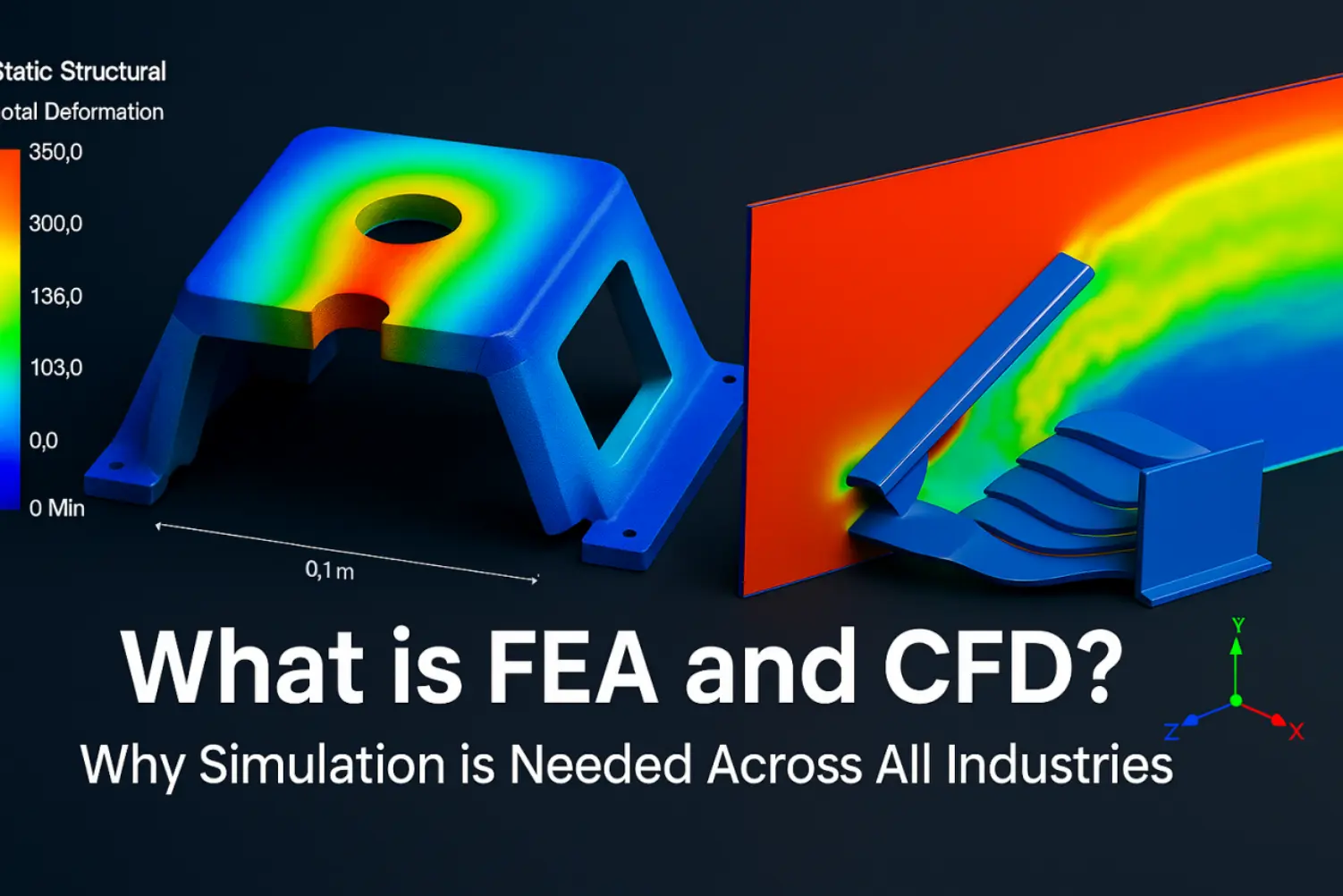
As the world rapidly shifts toward cleaner transportation and more efficient aerospace systems, engineering simulation is playing a bigger role than ever before. Behind the sleek body of an electric vehicle or the ultra-light structure of a next-generation aircraft, there is a world of CFD (Computational Fluid Dynamics) and FEA (Finite Element Analysis) ensuring these innovations are safe, fast, efficient, and reliable.
In this article, we'll explore how these two simulation technologies—CFD and FEA—are transforming the electric vehicle (EV) and aerospace industries. From optimizing battery cooling to reducing drag and weight, simulation tools like Ansys, COMSOL, SolidWorks, and STAR-CCM+ are driving engineering excellence.
The Role of CFD in Electric Vehicles and Aerospace
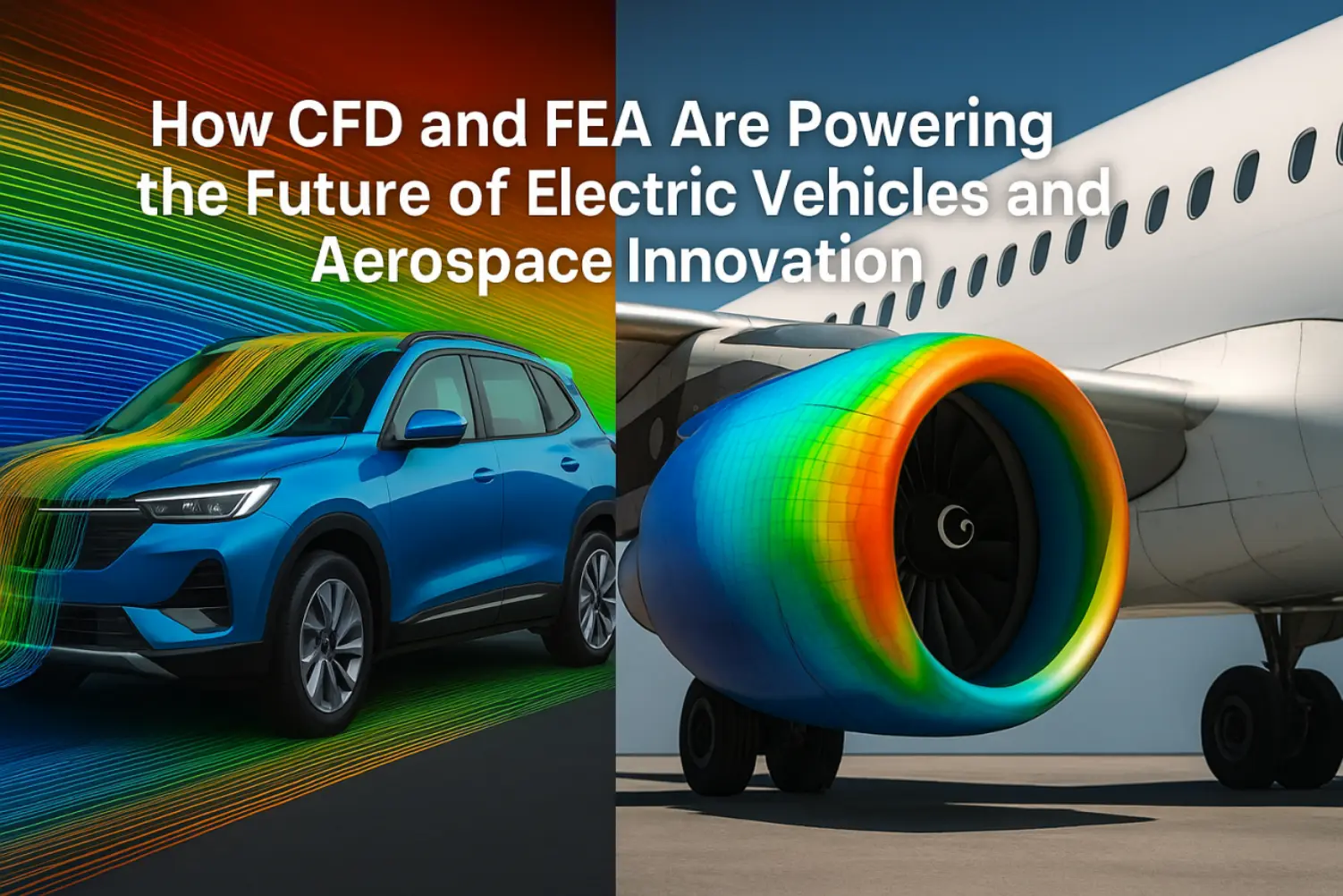
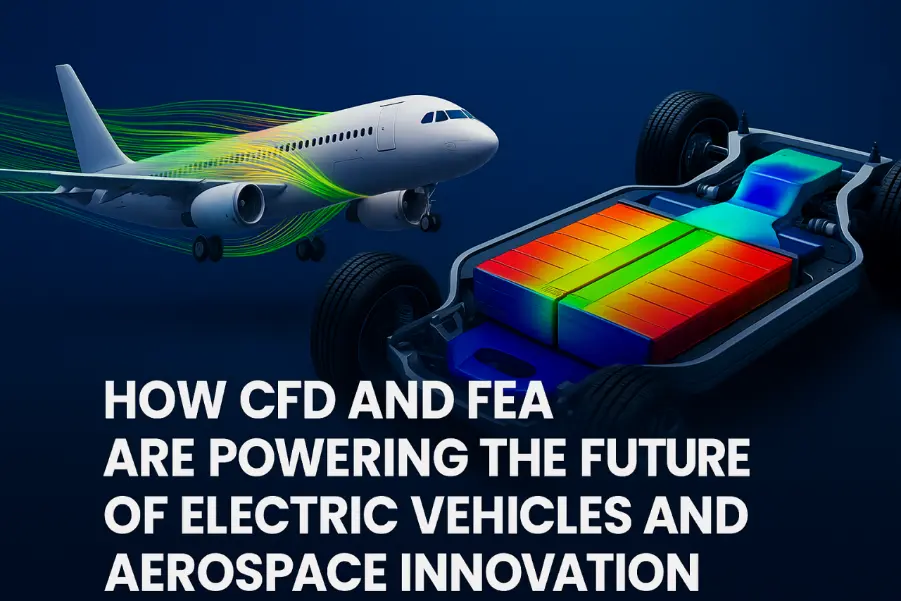
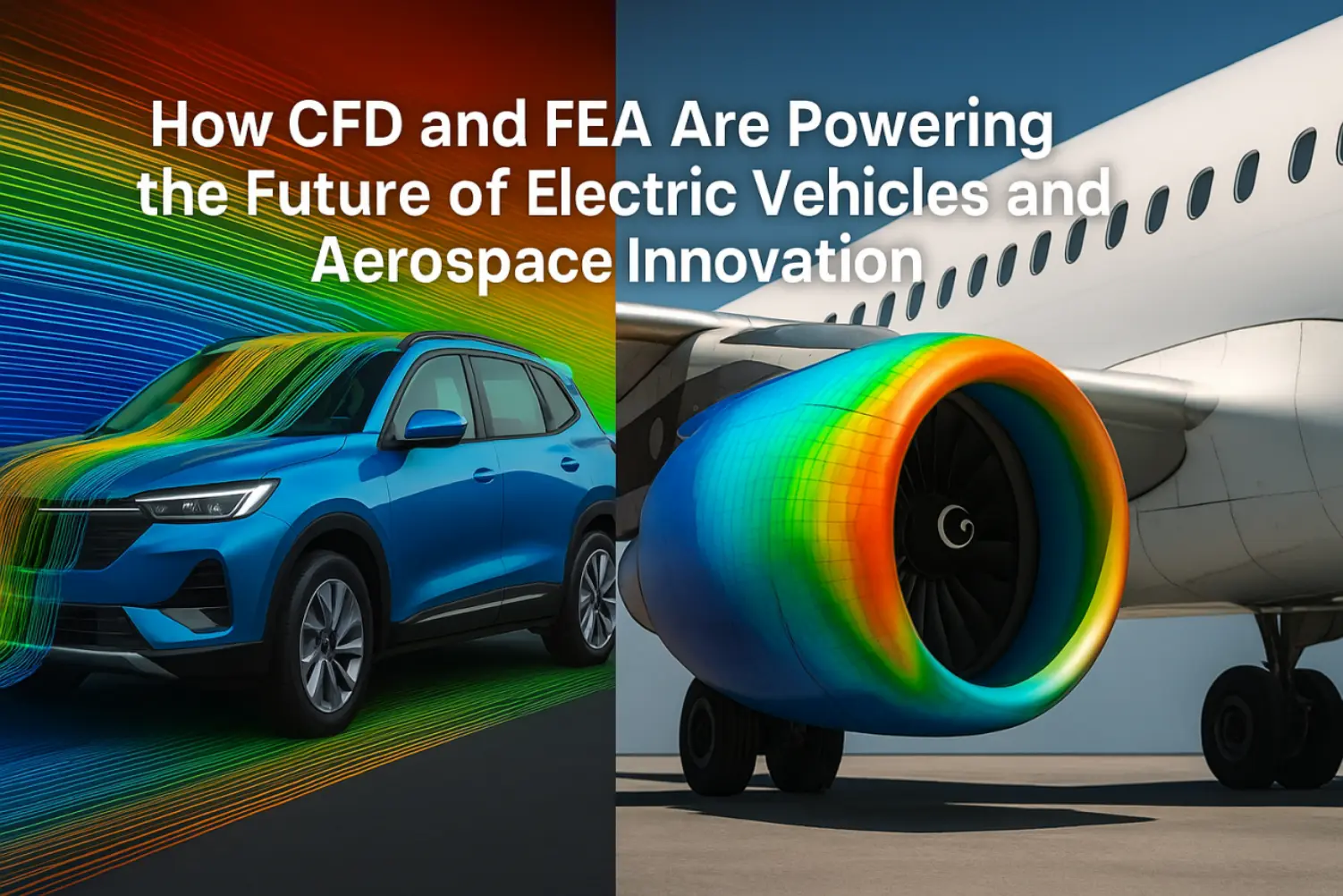
Computational Fluid Dynamics is essential in industries where airflow, heat, and fluid behavior play a critical role in performance. In electric vehicles, CFD helps engineers design better thermal management systems that keep batteries, motors, and power electronics within safe temperature limits. These systems must perform efficiently without consuming excess energy.
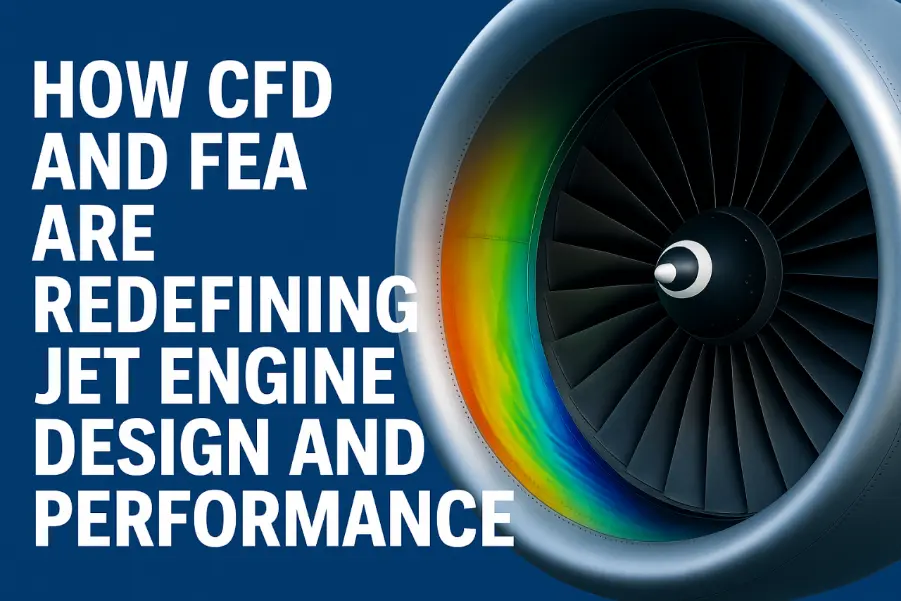
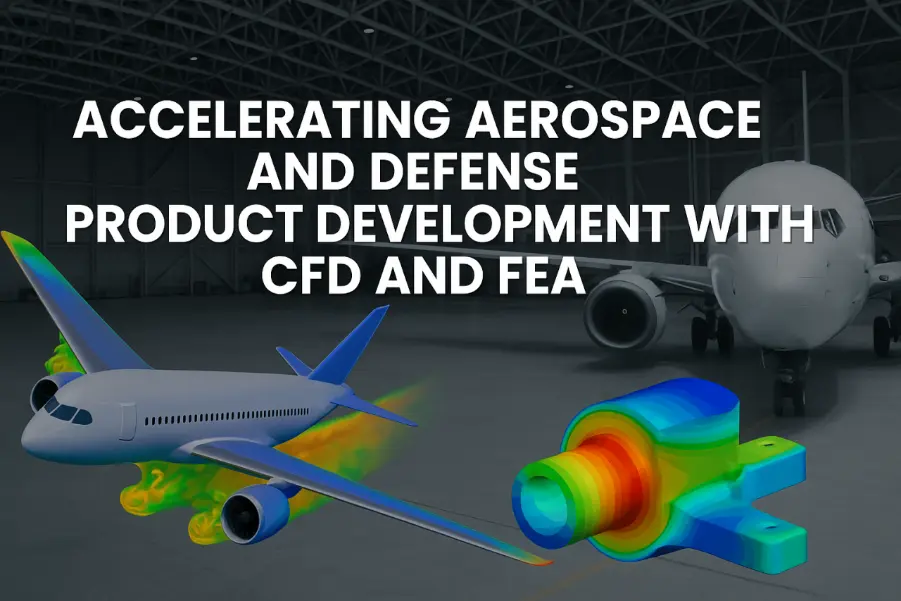
A similar challenge exists in aerospace, where air resistance and cooling are major concerns. CFD is used to study how air flows over wings, fuselages, engine inlets, and even cabin ventilation systems. With simulation, engineers can visualize airflow patterns, pressure zones, and turbulence—then make improvements before building a single part.
CFD also enables engineers to simulate under-hood air movement, cooling airflow through radiators, brake cooling ducts, and aero packages that enhance downforce and reduce drag.
The Impact of FEA in Aerospace and EV Engineering
Finite Element Analysis is equally crucial. EV chassis and aerospace components must be lightweight yet strong. FEA allows engineers to test how parts will behave under stress, vibration, and impact. From the aluminum body of an EV to the composite skin of a jet wing, simulation ensures that materials are used efficiently—without risking safety or durability.
In aerospace, FEA is used to simulate pressurization, fatigue life, vibration analysis, and thermal expansion across fuselage frames, turbine blades, and landing gear. In EVs, FEA is applied to study crash safety, battery enclosure strength, and durability of suspension parts under road loads.
These simulations help engineers reduce physical testing cycles and get their designs to market faster, with higher confidence in real-world performance.
Simulation Tools Behind the Innovation
Leading simulation tools such as Ansys Fluent, COMSOL Multiphysics, STAR-CCM+, and SolidWorks Simulation are used extensively in these industries. Each offers unique advantages.
- Ansys Fluent is preferred for its advanced turbulence modeling, thermal-fluid coupling, and aerodynamic analysis.
- COMSOL shines when multiphysics interactions like electromagnetic–thermal coupling are needed, especially in battery and motor design.
- SolidWorks Simulation integrates directly into CAD workflows and is commonly used for FEA on structural components.
- STAR-CCM+ offers advanced meshing, automation, and robust capabilities for aerodynamic and combustion simulations in aerospace.
Using these tools, engineers can predict failure points, improve energy efficiency, and innovate faster.
Why Simulation is the Future of Design
The move toward electric mobility and lightweight aerospace systems depends heavily on simulation. Without CFD and FEA, engineers would be forced to rely on expensive and time-consuming physical tests. Simulation allows teams to explore multiple design options in a virtual environment—reducing risk, saving money, and accelerating development timelines.
As industries push for higher performance and sustainability, digital engineering with CFD and FEA is no longer a luxury—it's a necessity.
Conclusion
CFD and FEA are driving the transformation of electric vehicles and aerospace systems. Whether it's cooling a high-voltage battery or reducing drag on a supersonic jet, simulation helps engineers push the boundaries of design.
By using tools like Ansys, COMSOL, STAR-CCM+, and SolidWorks, today's engineers are building the technologies that will define the future of transportation.