
Introduction
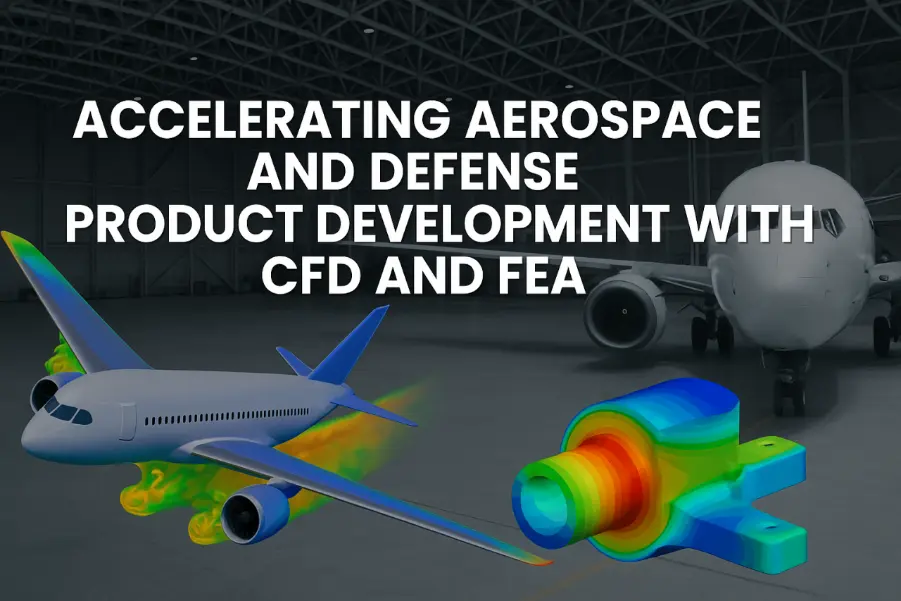
The aerospace and defense industry demands extreme precision, high reliability, and top-tier performance under the most unforgiving conditions. Whether it's designing a fighter jet, a satellite structure, or a missile guidance fin, engineering decisions must be backed by data—not assumptions. That's where simulation technologies like CFD (Computational Fluid Dynamics) and FEA (Finite Element Analysis) come in.
Simulation enables aerospace engineers to evaluate real-world behavior of complex components before anything is built. By using advanced tools like Ansys, COMSOL, STAR-CCM+, and SolidWorks, engineers can simulate aerodynamic forces, structural loads, thermal conditions, and vibration profiles in a fully virtual environment. This approach is faster, safer, and more cost-effective than traditional prototyping.
Why Simulation Is Critical in Aerospace and Defense
Aerospace and defense systems operate in conditions that are far beyond what typical commercial products face. For instance, an aircraft wing must withstand extreme turbulence, fluctuating air pressures, and fatigue from thousands of flight hours. A spacecraft endures intense vibration at launch and thermal cycling in orbit. Defense systems such as unmanned aerial vehicles (UAVs), radar domes, or guided weapons must perform flawlessly in unpredictable scenarios.
Testing these systems physically is not only expensive—it can be impractical or dangerous. That's why digital simulation has become a foundational tool in every stage of product development, from conceptual design to qualification.
CFD in Aerospace and Defense Applications
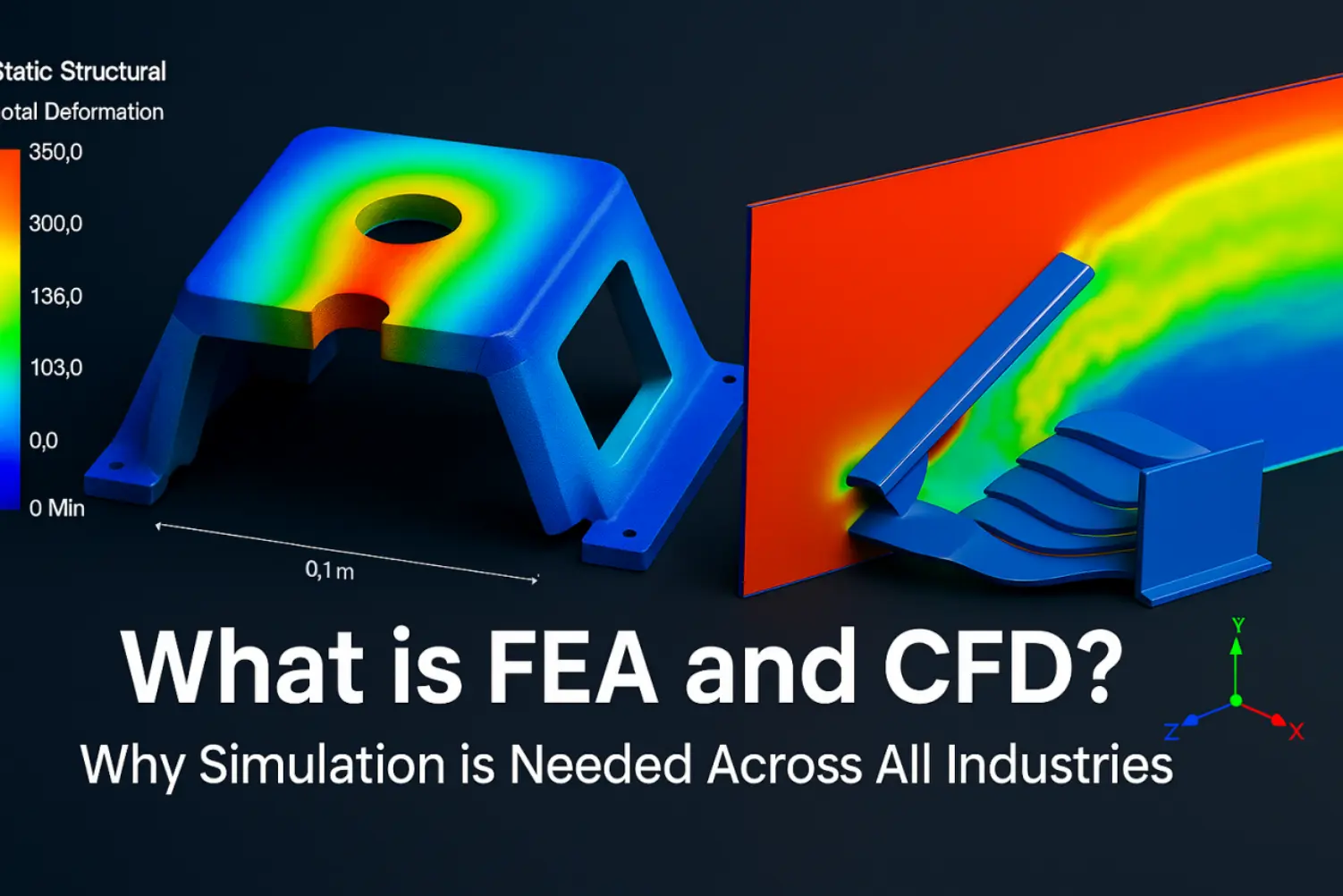
Computational Fluid Dynamics is used extensively to study airflow, pressure distribution, heat transfer, and aerodynamics. It plays a vital role in:
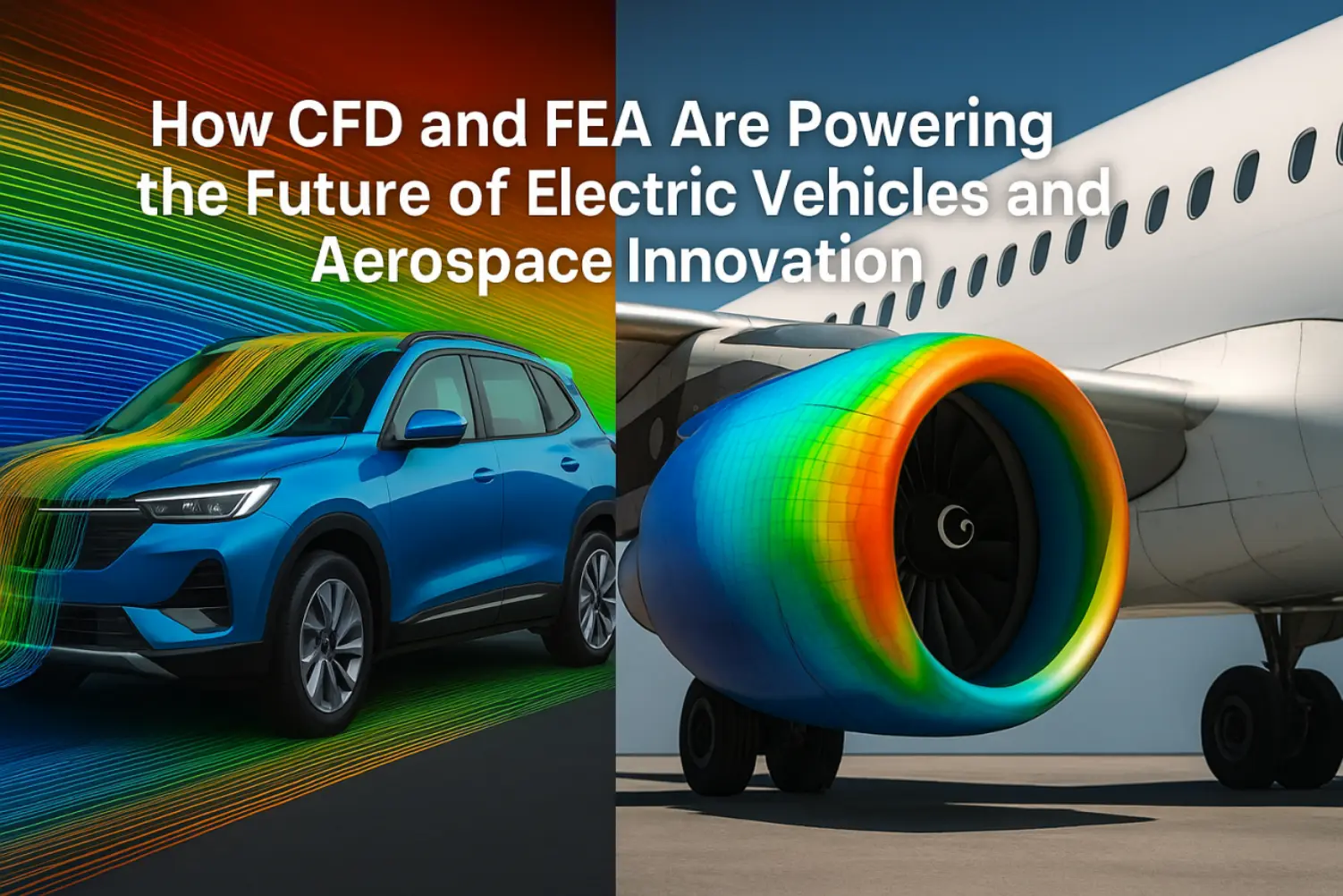
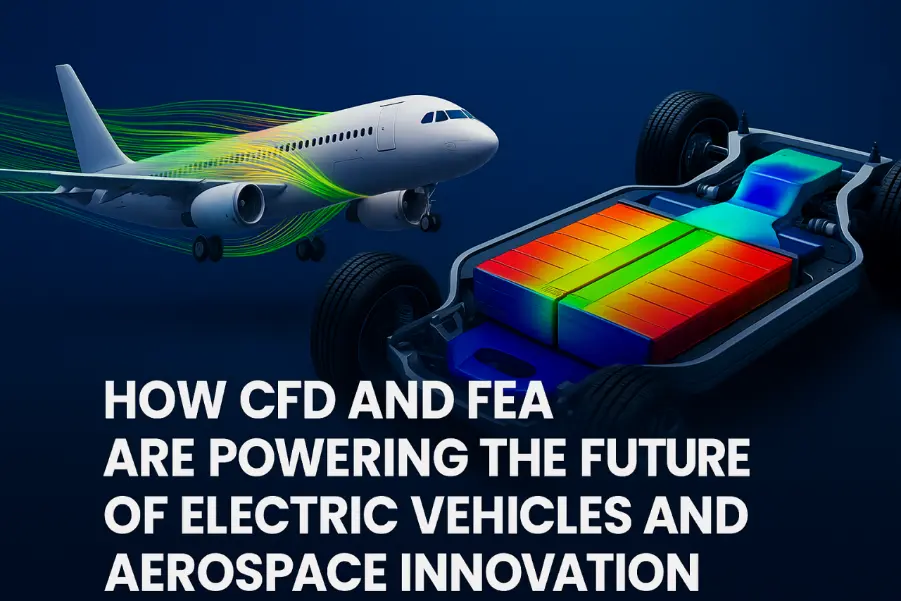
- Aircraft aerodynamics: Simulating airflow over wings, fuselage, tail, and control surfaces
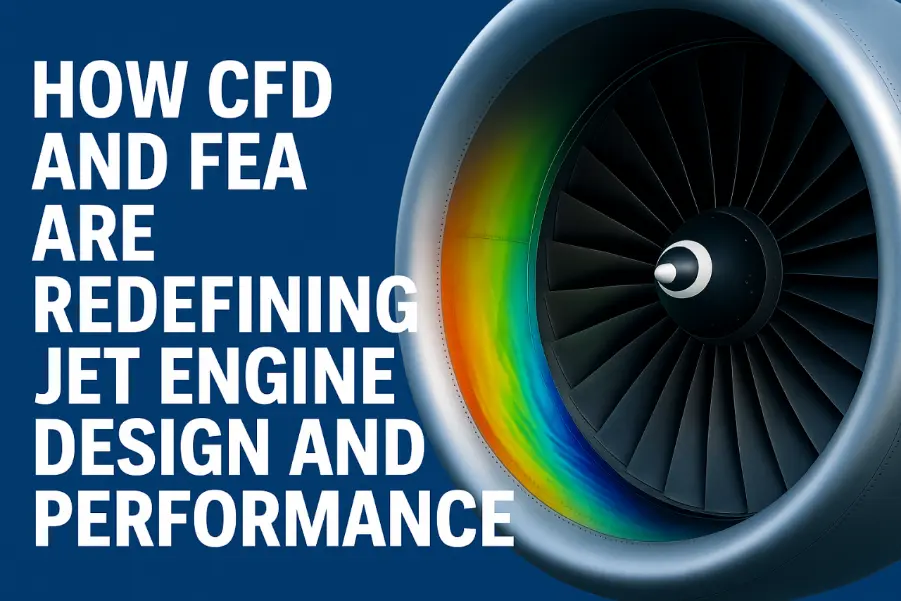
- Engine cooling and combustion: Optimizing airflow through jet engines and turbine blades
- Thermal control systems: Managing heat in avionics and onboard electronics
- Space re-entry and shock heating: Simulating high-speed atmospheric entry conditions
- Radar dome airflow: Ensuring aerodynamic stability for sensitive communications hardware
CFD allows engineers to detect flow separation, reduce drag, and improve lift efficiency—ultimately contributing to fuel savings, stealth characteristics, and flight safety.
FEA in Aerospace and Defense Engineering
Finite Element Analysis complements CFD by focusing on structural performance. It helps engineers evaluate how components respond to loads such as vibration, pressure, acceleration, or thermal expansion. Applications include:
- Wingbox and fuselage stress analysis
- Landing gear impact simulations
- Rocket and missile casing deformation
- Composite material failure prediction
- Modal and harmonic vibration analysis
With FEA, aerospace engineers can predict fatigue life, identify high-stress zones, and optimize material usage while meeting weight and safety requirements. This is particularly important when working with expensive composites or mission-critical components.
Real-World Impact
Using CFD and FEA, companies can simulate and improve systems long before flight testing. For example, defense contractors use simulation to validate UAV wing flutter behavior, while spacecraft designers use multiphysics simulations to analyze how heat affects satellite components during solar exposure and eclipse.
Simulation also plays a key role in failure analysis and design iteration, helping teams avoid redesigns late in the development cycle. It reduces the number of physical prototypes needed, accelerates approval processes, and ensures compliance with strict aerospace standards.
Conclusion
In aerospace and defense, there's no room for guesswork. Whether it's an aircraft at 35,000 feet or a satellite orbiting the Earth, simulation ensures that systems perform flawlessly under extreme conditions. CFD and FEA provide the insight, confidence, and optimization needed to develop safer, lighter, and more efficient aerospace solutions.
As the industry moves toward electrification, autonomous flight, and hypersonic technologies, the role of simulation will only continue to grow. Forward-thinking teams that invest in simulation today are shaping the defense and aerospace systems of tomorrow.